Lightweight design
Lightweight design, also referred to as lightweight construction, is now considered a key design principle across numerous industries. In the construction industry, the automotive industry, mechanical engineering, and aviation alike, the aim is to make components as lightweight as possible without compromising stability, safety, or functionality.
However, the requirements and technical approaches vary significantly from one industry to another. Whereas lightweight construction in the building sector primarily focuses on building and wall structures, industrial lightweight design centers on optimizing technical components, such as shafts, drive components, or structural parts.
Lightweight design in industry
In industrial practice, forming processes are increasingly used to manufacture lightweight components with particularly high material efficiency. At Felss, incremental forming processes enable us to produce hollow or thin-walled components that can transmit high forces and torques despite their low weight. Cold forming also improves the material properties: the continuous grain flow increases component strength and service life.
In the video, we explain how incremental forming processes are used to produce components that are both exceptionally lightweight and capable of withstanding high loads:
What is lightweight design? Definition and principles
Lightweight design is a design strategy in which components are engineered to achieve maximum strength, functionality, and service life at the lowest possible weight.
Benefits of lightweight design in technical applications
The aim of lightweight design is to use material efficiently and optimize structures so that they withstand mechanical loads without adding unnecessary mass.
Typical benefits of lightweight design include:
| Objective | Benefit |
|---|---|
| Weight reduction | lower energy consumption and improved efficiency |
| Material savings | optimized use of materials |
| Functionality | high strength at minimal weight |
| Sustainability | lower resource consumption |
Why lightweight design is essential in the automotive industry
Lightweight design in the automotive industry pursues one primary objective: making vehicles more efficient and sustainable. Every kilogram saved has a direct impact on fuel consumption, CO₂ emissions, driving dynamics, and, in electric vehicles, driving range.
For this reason, numerous vehicle components are consistently optimized for low weight, from the chassis and structural components to the drivetrain. Rotating components such as shafts and transmission components benefit particularly from lightweight design solutions.

Video: lightweight automotive design
The following video shows why cold-forming processes are ideal for high-precision automotive components:
Our innovative processes, including rolling, axial forming, and rotary swaging, enable the precise production of lightweight components that meet the automotive industry’s growing requirements. Learn more about our solutions for the automotive industry.
Lightweight design in e-mobility
As the automotive industry becomes increasingly electrified, lightweight design is becoming even more important. In conventional vehicles, the focus is primarily on fuel consumption and emissions. In an electric vehicle, however, weight directly affects energy efficiency and driving range. Every additional kilogram must be accelerated by the electric motor and supplied with energy by the battery. Learn more in our article on the future of electric drives.
Lightweight solutions for electric vehicles
Consistently reducing weight can therefore noticeably lower a vehicle’s energy demand. At the same time, batteries increase the overall weight of many vehicles, further intensifying the need for lightweight design solutions. Manufacturers are therefore increasingly using optimized component structures and high-strength materials to save weight without compromising stability or safety.
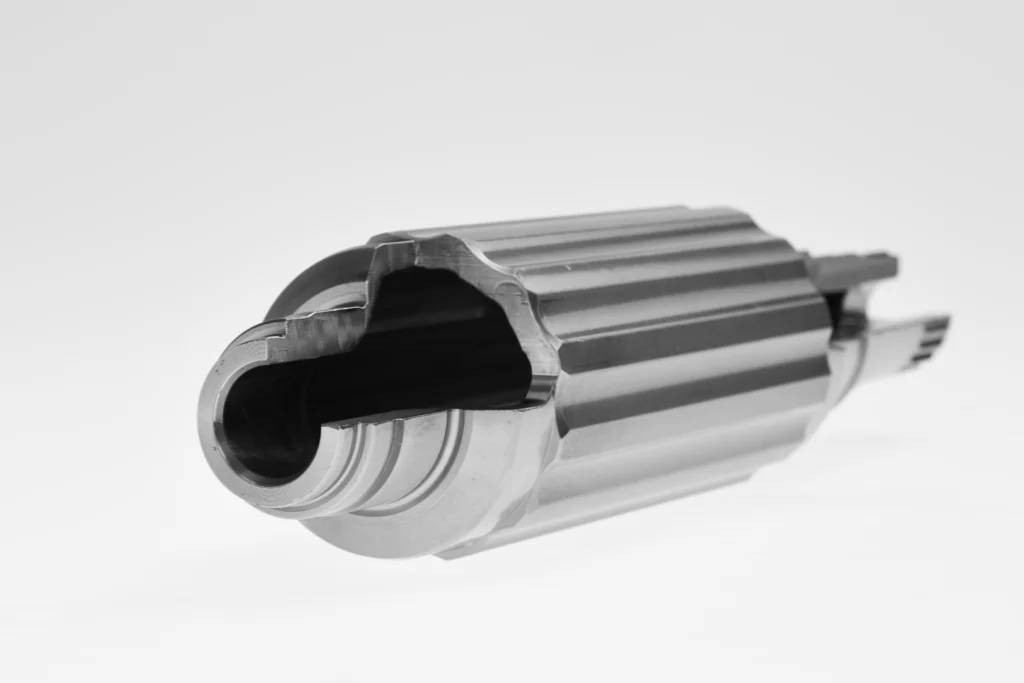
Lightweight yet durable components play a particularly important role in electric drivetrains. Components such as rotor shafts and transmission components must withstand high rotational speeds and mechanical loads while keeping mass as low as possible. Modern manufacturing processes make it possible to form these components with precision while reducing their weight.
Video: lightweight design in electric vehicles using a rotor shaft as an example
The following video explains how precision forming processes such as rotary swaging and axial forming produce lightweight yet highly robust rotor shafts, an important basis for efficient electric vehicles.
Lightweight construction in aviation
Aviation is one of the industries in which lightweight construction is applied most consistently. Because every additional kilogram increases fuel consumption, weight-optimized designs play a decisive role in aircraft efficiency.
Typical applications range from structural components and turbine components to high-load precision shafts. Alongside new materials, optimized manufacturing processes are increasingly being used to produce components that combine low weight with high strength.
Explore Felss solutions for aviation.
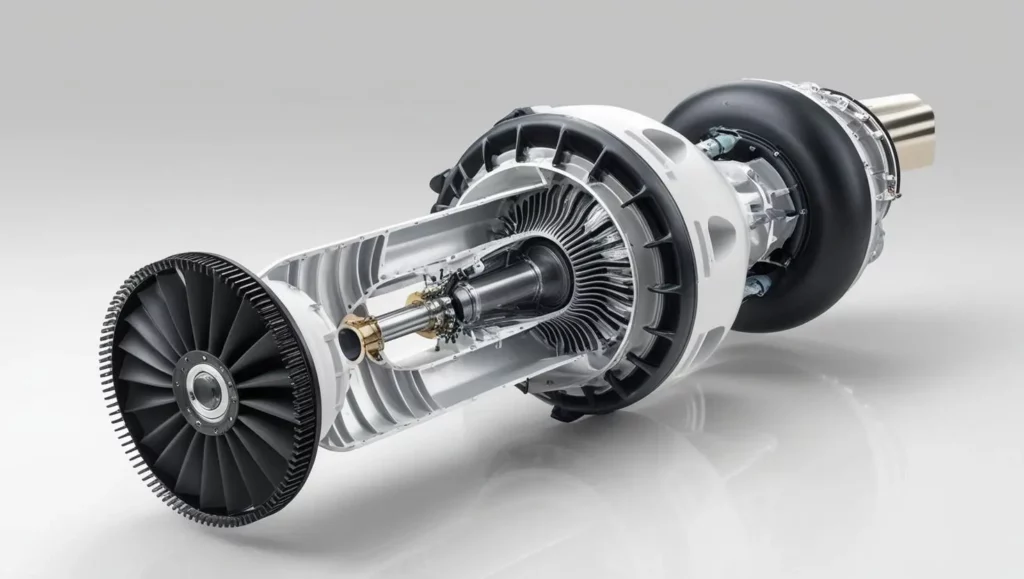
Example components by industry
Rotating and highly loaded components such as shafts and drive components offer particularly significant savings potential. Optimized geometries, hollow structures, and modern manufacturing processes can deliver substantial weight reductions without compromising mechanical performance.
Lightweight design at Felss
Lightweight design can only be implemented economically when the manufacturing processes used are designed for it. As a specialist in cold forming and component production, Felss develops solutions that enable components to be manufactured with high material efficiency and repeatability.
Our forming processes, axial forming, rotary swaging, and rolling, enable targeted material distribution and the precise production of lightweight components for a wide range of industrial applications:
| Industry | Lightweight design objective | Examples |
|---|---|---|
| Automotive industry | reduced fuel consumption | drive shaft |
| E-mobility | extended range | rotor shaft |
| Aviation | reduced fuel consumption | drive components, structural components |
Series-Production ready in a single process step
Integrating several manufacturing steps into a single process also reduces resource consumption and production costs. This enables lightweight solutions to be implemented economically and with high process reliability in series production.
FAQ on lightweight design
What is meant by lightweight design?
Lightweight design is a design strategy in which components are developed to achieve maximum strength and functionality at minimum weight.
Why is lightweight design important in the automotive industry?
Lighter vehicles consume less energy and produce fewer CO₂ emissions. They also offer improved driving dynamics and efficiency.
Which materials are used in lightweight design?
Typical materials include aluminum, high-strength steels, titanium, and various fiber-reinforced composites.
What role do forming processes play in lightweight design?
Forming processes make it possible to shape components with high precision and concentrate material specifically where mechanical loads occur.
What are the benefits of hollow shafts in lightweight design?
Hollow shafts deliver significant weight savings while maintaining high strength. Modern forming processes allow material to be concentrated precisely where forces act, while material is saved in the interior. The result is weight-optimized components with a high level of functional integration.